General Cell Lines and Cell Cultures

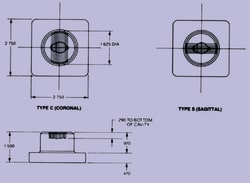
Electron Microscopy Sciences Rodent Brain Matrix Mouse, 30g, Coronal
RBM allow the investigator to slice either coronal (perpendicular to center line) or sagittal (parallel to center line) sections through the brain at intervals as small as 1mm. All RBM's are identical and durable to insure reproducible sections in the day-to-day, year-to-year, or on a between laboratory basis.
Constructed from high grade zinc to allow for rapid temperature equilibration, easy cleaning, and sterilization. The matrices are designed to accommodate the brains of rodents placed ventral side up. The channels are precisely cut at 1 mm intervals and 0.3 mm wide.
Size: 30g
Type: Coronal


Promocell GmbH PromoCell HDMEC-c 500,000 Human Dermal Microvascular Endothelial Cells, cryopreserved
Primary Human Dermal Microvascular Endothelial Cells (HDMEC) are isolated from the dermis of juvenile foreskin and adult skin (different locations). Since the dermis contains blood and lymphatic capillaries, HDMEC comprise Blood and Lymphatic Microvascular Endothelial Cells. Both have a common origin and can be identified by several markers.In addition, HDMEC are available which are pre-screened for VEGF (vascular endothelial growth factor) response. VEGF is an important signaling protein involved in both vasculogenesis and angiogenesis. In vitro, VEGF has been shown to stimulate endothelial cell mitogenesis, cell migration, sprouting, and microvascular permeability.

Promocell GmbH PromoCell HDLEC-c 500,000 Human Dermal Lymphatic Endothelial Cells, cryopreserved
Primary Human Dermal Lymphatic Endothelial Cells (HDLEC) are a subpopulation of the Human Dermal Endothelial Cells. They are isolated from the dermis of juvenile foreskin and adult skin (different locations) from a single donor.The cells are routinely analyzed by flow cytometric analysis and immunofluorescent staining:> 95% of the cells are CD31 positive and podoplanin positive.Lymphatic vessels transport excess fluids from tissues to the circulatory system and are a major component of the immune system. The transported fluid is nearly cell free. The vessels are highly permeable, because they lack a continuous basal membrane. Lymphatic endothelial cells are involved in pathological alterations of the lymphatic system. During tumor lymphangiogenesis, the lymphatic endothelial cells build new vessels that infiltrate tumors, attract tumor cells, and induce tumor cell metastasis.
Promocell GmbH PromoCell HNEpC-c 500,000 Human Nasal Epithelial Cells, cryopreserved
Primary Human Nasal Epithelial Cells (HNEpC) are isolated from normal human nasal mucosa and stain positive for cytokeratin.The epithelium in the nasal cavity cleans, humidifies, and warms inhaled air. In addition, it produces mucus, which binds particles that are subsequently transported to the pharynx by cilia on the epithelial cells. HNEpC are useful for in vitro studies of these processes.Our HNEpC are now also available from HLA-typed donors.

ATCC C32; Amelanotic Melanoma; Human (Homo sapiens)
C32 is a cell line that was isolated from the skin of a White, 53-year-old, male patient with amelanotic melanoma. This cell line was deposited by TR Chen and can be used in toxicology research.

Candida albicans strain 3147 (ATCC 10231™)
Candida albicans strain 3147 (ATCC 10231™) is a reference yeast strain used in sterility, preservative efficacy, and antifungal testing. This strain is recommended as a test organisms in USP <51>, <61>, <62>, <71>, and <2021>.
Recommended companion products:
MicroQuant™Candida albicans, high CFU (Fisher Cat. No. NC3456076, ATCC 10231-HQ-PACK™),
MicroQuant™ Candida albicans, low CFU (Fisher Cat. No. NC3456089, ATCC 10231-LQ-PACK™)
Genomic DNA (Fisher Cat. No. 50-238-4704, ATCC 10231DQ™).

ATCC HCT-15 Quantitative; purified DNA, 3 ug; Human
Purified genomic DNA isolated from the HCT-15 colon adenocarcinoma cell line (ATCC CCL-225). This product was quantified for oncology biomarker KRAS p.G13D via NGS and ddPCR.

ATCC NCI-H2023; Lung Carcinoma; Human (Homo sapiens)
NCI-H2023 [H2023] is a cell line that was isolated from the lungs of a 26-year-old, White, male patient with stage 3A non-small cell lung cancer: adenocarcinoma. This product has applications in cancer research.

ATCC Dermal Fibroblasts; Normal, Human, Neonatal
Primary Dermal Fibroblast Normal; Human, Neonatal (HDFn) is a cell line isolated from neonatal foreskin that has research applications in responding to pathogens, skin aging, wound healing, gene delivery, and skin diseases, including scleroderma.

ATCC SUP-B15; Lymphoblastic Leukemia; Human (Homo sapiens)
SUP-B15 is a B lymphoblast cell line that was isolated from the marrow of a White, 8-year-old, male patient with acute lymphoblastic leukemia (ALL). This cell line was deposited by SD Smith. It can be used in immunology and immune system disorder research.

ATCC HT-29; Colon Adenocarcinoma; Genomic DNA, Human
High molecular weight genomic DNA isolated from the HT-29; human colorectal carcinoma cell line.
Cell Applications Inc Human Uretha Epithelial Cells Total Kit, adult
Human Uretha Epithelial Cells Total Kit, adult(9310-05a) Cryopreserved (HUEpC), 1 ampoule(223-500) Epi Growth Media, 500ml(090K) Subculture Reagent Kit

ATCC Borrelia burgdorferi; Strain B31
Borrelia burgdorferi strain B31 is a whole-genome sequenced type strain that was isolated from a tick (Ixodes dammini). This bacterial culture has applications in infectious disease research, vector-borne disease research, and zoonotic disease research.

ATCC ES-D3 (D3); Stem Cell; Mouse (Mus muscullus)
ES-D3 [D3] is an embryonic multipotent stem cell line that was isolated from the embryo of a mouse. This cell line was deposited by T Doetschman and can be used in stem cell research.

ATCC A-704; Kidney Adenocarcinoma; Human (Homo sapiens)
A-704 is a cell line exhibiting epithelial morphology that was isolated from the kidney of a 78-year-old male patient with adenocarcinoma. This product has applications in cancer research.